

News center
Home· · ·News Center· · ·News Center
News Center
How To – Qualify “A Good Balance” – Chapter 1
Time:2026-08-04
Have you ever thought: What is the standard for a good balance?
Is it accuracy? Is it speed/sensitivity? Or is it reliable and durable over time?
This article explains how to judge whether an analytical balance is “good” for pharmaceutical/quality use, using key concepts from the USP General Chapters 41 and 1251—especially requirements related to accuracy, repeatability, and the minimum weighing value (minimum capacity).
Introduction to the United States Pharmacopeia (USP)
The United States Pharmacopeia (USP) was first published in 1820 and is one of the earliest pharmacopeias in the world. Today, besides the USP, many other pharmacopeias exist, such as the International Pharmacopeia compiled by the WHO (World Health Organization), the European Pharmacopeia, and the Japanese Pharmacopeia. In China, the 2020 edition of the Chinese Pharmacopeia was also newly published on July 2.
However, the USP is often regarded as a global standard, and its monographs and methods are widely cited and adopted by more than 140 countries/regions, giving it a certain level of authority.
In the USP, the core content related to weighing applications is mainly found in General Chapter 41 and General Chapter 1251.
USP Foundation: Where “balance quality” is defined
USP addresses balance performance mainly in:
- General Chapter 41: “Balance” (mandatory)
Covers core requirements, including:- Accuracy requirements
- Repeatability requirements
- Calibration/verification within the operating range
- General Chapter 1251: “Weighing on an Analytical Balance” (supplementary)
Provides additional operational guidance, especially for the suitability of weighing in real use.
Accuracy: Is the balance measuring correctly?
A good balance should meet USP-based accuracy expectations.
USP concepts (from your text) indicate:
- Accuracy should be validated across the entire working range (not only at one point).
- Using appropriate test weights, the balance’s displayed value should deviate within an acceptable limit (example given: < 0.10%).
- Test weights should cover roughly 5%–100% of the balance weighing range to avoid misleading results from using overly light weights.
Key idea: If the balance is not accurate, other features (fast response, high resolution display) cannot compensate for incorrect measurement results.
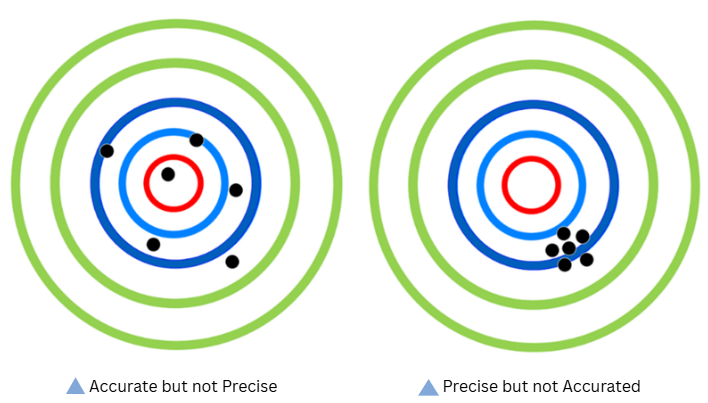
Repeatability / Precision: Can it reproduce the same result?
A good balance should produce consistent results under the same conditions.
USP-based logic:
- Repeatability is assessed by repeated applications of the weighing procedure (commonly described using repeated tests such as 10 times).
- The outcome is summarized as standard deviation (s) or equivalent metrics.
Key idea: For lab work, repeatability is how you confirm the balance is stable enough for your intended analytical method.
Minimum Weighing Value: Is it trustworthy at low mass?
Even a “high-end” balance can behave poorly when used below its capability.
USP-based clarification:
- The minimum weighing value refers to the net weight of the sample, not tare/gross weight.
- In practice: regardless of container weight, the net sample mass you measure should be ≥ the minimum weighing value.
USP provides a conceptual method in:
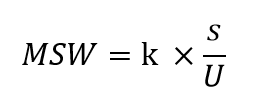
Where:
- k = coverage/safety factor (commonly k = 2, confidence level described as 95.54%)
- s = repeatability standard deviation
- U = relative measurement uncertainty (example given: 0.10%)
Key idea: If your real samples are near/below the minimum weighing value, the balance may not be “good” for that task—even if it reads tiny digits.
Practical Conclusion: How to call a balance “A Good Balance”
A balance can be considered “good for pharmaceutical/quality use” when it satisfies:
- Accuracy within acceptable USP-based criteria using appropriate test weights
- Repeatability (repeatable results; stable sss)
- Suitable minimum weighing value so that your net sample weight during testing is ≥ the minimum capacity
How can Precisa assist with USP requirements?
Precisa supports pharmaceutical manufacturers in implementing USP <41> weighing requirements across a comprehensive portfolio of laboratory balances.
At the high-precision end, the 390 Series HA/HF (analytical 0.1 mg and semi-micro 0.01 mg) and the 360 Series ES (semi-micro 0.01 mg and analytical 0.1 mg) are purpose-built for regulated environments. Both feature automatic self-calibration (SCS) triggered by changes in temperature, humidity, or pressure, alongside user login, audit trail, and administrator-level access controls to restrict operation and monitor results. The 360 ES further includes a dedicated minimum weight application, automated repeatability testing, buoyancy, all aligning directly with USP <41> performance verification requirements.
For mid-range multi-purpose use, the 520 Series PT/PB and 360 Series EP extend USP <41> compliance into precision-balance territory. The 520 PT adds a 6.4″ touchscreen with multi-user management, electronic levelling, and BEST buoyancy error suppression technology — while both 520 variants share Precisa’s PHASTbloc™ weighing cell, SCS auto-calibration, and full GLP data output. The 360 EP mirrors the ES specification sheet with the same USP minimum weight figures across analytical and precision ranges, backed by the same SCS calibration and GLP/GMP clock.
Get in Touch
We hope you have found this article about the USP weighing requirements informative. If you would like assistance with conforming to the guidelines or to find out more information, please do not hesitate to get in touch with a member of our team today.
- PRVETechcomp Thailand was excited to participate in TSEN 2026!
- NEXTTechcomp Thailand was excited to participate in TSEN 2026!
Related reading
- 2026-08-11How To – Qualify “A Good Balance” – Chapter 2
- 2026-08-04How To – Qualify “A Good Balance” – Chapter 1
- 2026-05-29Techcomp Thailand was excited to participate in TSEN 2026!
- 2025-12-22Measurement of Time-Resolved Photoluminescence in the Microsecond Range
- 2025-11-10Welcoming Partners at the Techcomp Thailand



 47/356 Kaitak Building 10 Fl., Room No. K100702-703, Popular Rd.,Banmai, Pakkret, Nonthaburi 11120, Thailand
 +66-2-117 9465-66
 +66-2-117 9467
 thsalesquote@techcomp.co.th
 @thk7892f
 +66-2-117 9465-66


 Top
Top